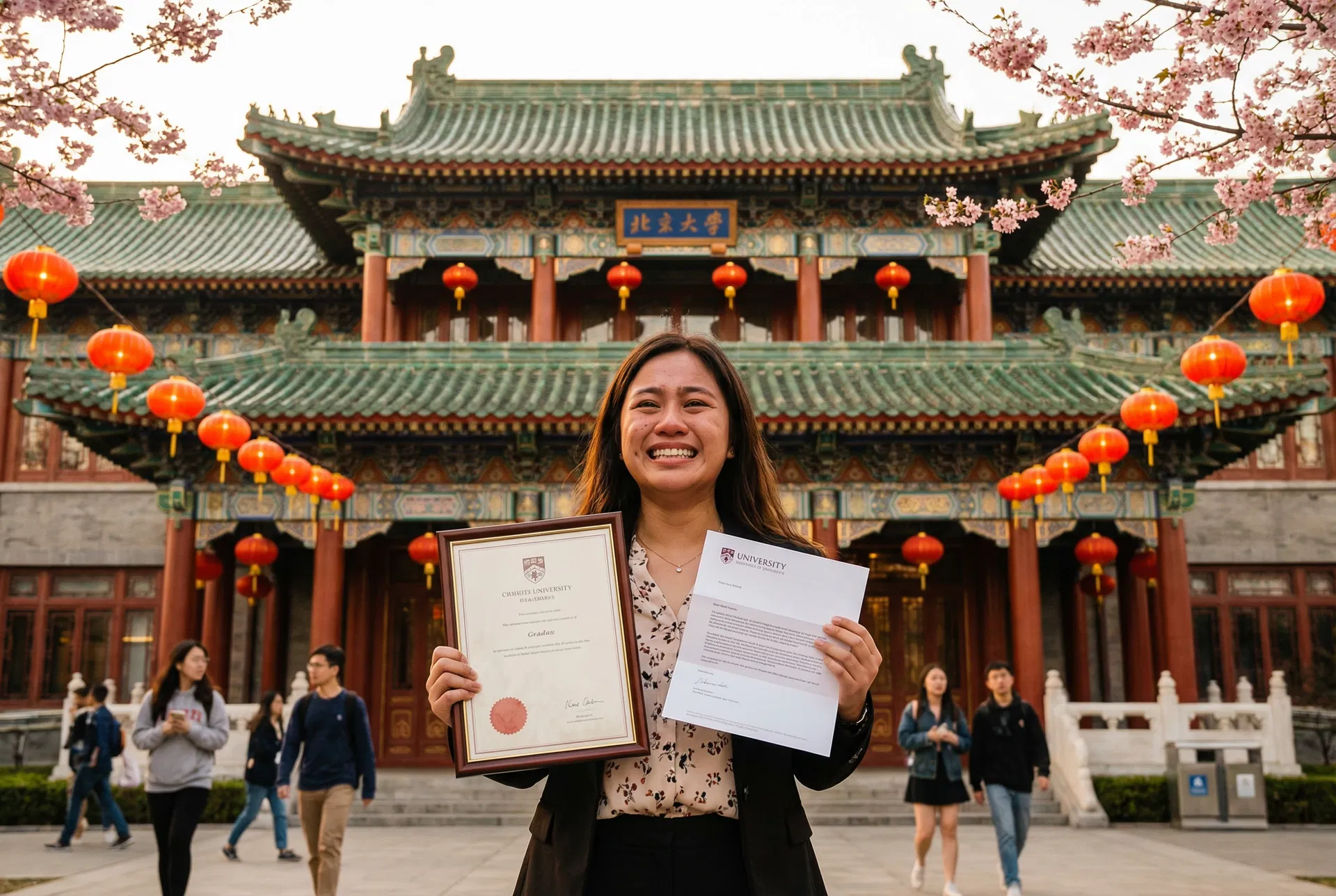

For international students pursuing graduate degrees in China, the relationship with a supervisor — known as 导师 (dǎoshī) — is unlike almost anything in Western academic culture. It is not simply a professional mentorship or an advisory arrangement. In Chinese universities, the supervisor relationship is deeply hierarchical, profoundly personal, and carries real institutional weight. Getting it right can define the trajectory of an entire academic career. Getting it wrong can make the years ahead unnecessarily difficult.
This guide offers a frank and practical look at how to navigate this relationship with intelligence, respect, and cultural awareness.
# 1. Understand the Real Power Your Supervisor Holds
The first thing every international student must internalize is this: your supervisor has significant authority over your graduation, your degree, and your academic future in China.
Unlike in some Western systems where a thesis committee collectively evaluates a student's progress, the Chinese graduate system places enormous discretionary power in the hands of the individual supervisor. The supervisor typically decides:
- Whether a student is ready to defend their thesis
- Whether the thesis meets the standard for submission
- Whether the student receives the necessary internal approvals to graduate
- In many cases, whether the student's stipend or scholarship is renewed
This is not a relationship of equals. It is a relationship of significant dependency, and approaching it with that clarity — rather than with the assumption of peer-level collaboration — is the foundation of everything else in this guide.
This does not mean the relationship cannot be warm, productive, and genuinely rewarding. Many supervisors in China are outstanding mentors who invest deeply in their students. But the power dynamic is real, and ignoring it is a mistake that international students sometimes make to their own detriment.
# 2. Tasks Assigned by Your Supervisor: Know the Difference
One of the most practically confusing aspects of the supervisor relationship in China is the question of what tasks a student is expected to perform. The answer requires some nuance.
Academic and research tasks within your responsibilities — running experiments, reviewing literature, writing reports, assisting with grant applications, co-authoring papers — are unambiguously part of the graduate student role. These should be completed diligently and on time. Treating them as optional or negotiable is a serious misstep.
Personal or administrative tasks that fall outside academic scope — such as running personal errands, helping with the supervisor's family matters, or performing administrative work for the department unrelated to research — are a different category. In practice, many students in China do assist with such requests, and outright refusal can create friction. The cultural expectation of reciprocal obligation (人情, rénqíng) means that small favors are often part of the relational fabric.
The practical wisdom here is this: use judgment, not confrontation. If a request feels genuinely inappropriate or exploitative, it is worth reflecting on how to address it — but a blunt refusal in the moment is rarely the right approach. Seek advice from senior students in the lab (师兄师姐, shīxiōng shījiě) who understand the specific dynamics of your supervisor's expectations.
# 3. Recognize What Kind of Supervisor You Have
Not all supervisors are created equal, and recognizing the type of mentor you are working with will help calibrate expectations and strategy.
The mentor-type supervisor (好导师) is the gold standard. This kind of supervisor takes time to explain not just what to do, but why it matters and how to approach it. They share their reasoning, discuss methodology, and treat the student's intellectual development as a genuine priority. Working with such a supervisor is an extraordinary privilege — one that should be reciprocated with effort, loyalty, and genuine engagement.
The results-oriented supervisor is more common than many students expect. This type of supervisor may have limited time, limited interest in teaching process, or simply a management style focused on outputs rather than development. They want results, papers, and completed tasks — not necessarily a dialogue about methodology. With this type of supervisor, proactive communication about progress becomes essential. Regular written updates, clear milestone reports, and visible productivity are the currencies that maintain a functional relationship.
The key insight is that neither type is inherently good or bad — they require different strategies. Expecting a results-oriented supervisor to behave like a mentor will lead to frustration. Adapting to the reality of the relationship is a form of professional maturity.
# 4. Show Respect in Social and Public Settings
Chinese academic culture places high value on 面子 (miànzi) — face, reputation, and public standing. This concept has direct implications for how students should behave around their supervisors in group settings.
In seminars, department meetings, lab presentations, or social gatherings, avoid any behavior that could be interpreted as challenging, embarrassing, or undermining your supervisor in front of others. This includes:
- Publicly correcting a supervisor's statements, even if factually warranted
- Expressing frustration or disagreement in a visible way during group meetings
- Making jokes or comments that could be perceived as disrespectful
- Arriving late or appearing disengaged at events where the supervisor is present
The standard of respect expected in Chinese academic culture is higher than in many Western contexts. International students who come from environments where open debate and challenge are encouraged may find this adjustment difficult. But the cost of a public misstep — even an unintentional one — can be lasting.
Respect in public does not mean suppressing all opinions or becoming invisible. It means choosing the right venue and the right moment for every kind of communication.
# 5. Disagree Privately, Never Publicly
Disagreement is a normal and healthy part of academic life. Supervisors are not infallible, and there will be moments when a student has a different perspective on a research direction, a methodological choice, or an academic judgment.
The appropriate channel for disagreement in Chinese academic culture is always private. Request a one-on-one meeting. Frame the conversation as seeking guidance rather than challenging authority. Use language that preserves the supervisor's face while still clearly communicating the concern:
*"I have been thinking about the approach we discussed, and I wanted to ask for your guidance on something I am not sure I fully understand..."*
This framing — curious rather than confrontational — is far more likely to result in a genuine dialogue. It also demonstrates the kind of intellectual humility that Chinese supervisors tend to respect.
If a disagreement is serious and cannot be resolved through private conversation, most universities have formal mechanisms — graduate student offices, academic affairs departments — that can be consulted. But these should be considered a last resort, not a first response.
# 6. Rules Apply to Everyone — Including International Students
One of the most important things to understand about studying in China is that Chinese universities operate within a clear and enforced rule system. Academic integrity policies, attendance requirements, publication standards, and administrative deadlines are not suggestions. They apply equally to domestic and international students.
Some international students arrive with the assumption — sometimes unconscious — that their foreign status provides a degree of flexibility or exemption. This assumption is incorrect and can lead to serious consequences.
Academic misconduct — plagiarism, data fabrication, unauthorized collaboration — is treated with particular severity. A supervisor who might otherwise be willing to advocate for a student in many circumstances will find themselves unable to intervene when a student has violated fundamental academic integrity rules. The institutional consequences of such violations can include degree revocation, expulsion, and permanent damage to academic reputation.
The practical message is straightforward: follow the rules, meet the deadlines, and maintain academic integrity without exception. This is not a burden unique to China — it is the foundation of any legitimate academic career. But in China's highly structured university environment, the consequences of non-compliance are swift and often irreversible.
# 7. Build Your Lab Community: Meals, Coffee, and Long-Term Networks
The final piece of advice in this guide is perhaps the most underestimated: invest in your relationships with fellow students in the lab.
In Chinese academic culture, the lab group — often called 课题组 (kètí zǔ) — functions as a close-knit community. Senior students (师兄师姐) are invaluable sources of practical knowledge about how the lab operates, what the supervisor expects, which administrative processes to follow, and how to navigate difficult situations. Junior students (师弟师妹) will look to international students as a resource in turn.
The rituals of this community — shared meals, coffee breaks, lab gatherings, group outings — are not peripheral to academic life. They are the social infrastructure through which trust is built, information is shared, and long-term professional relationships are formed.
For international students, these connections carry an additional dimension: they are the foundation of a professional network in a country that may become central to a career. China's research output, economic influence, and global academic partnerships continue to grow. The colleagues met over a bowl of noodles in a university canteen today may be collaborators, references, or professional contacts for decades to come.
Make the time. Show up to the group dinners. Learn a few words of Mandarin to use in casual settings. Express genuine interest in the lives and research of the people around you. These investments compound over time in ways that are difficult to predict and impossible to manufacture later.
# A Final Word
The supervisor relationship in China is one of the defining experiences of graduate study. It can be challenging, particularly for students from academic cultures with different norms around hierarchy, communication, and authority. But approached with cultural intelligence, genuine respect, and a willingness to adapt, it can also be one of the most formative and rewarding professional relationships of an academic career.
The students who thrive in Chinese graduate programs are not those who pretend the cultural differences do not exist. They are the ones who take the time to understand them, work within them thoughtfully, and build the kind of relationships — with supervisors, with peers, and with the broader academic community — that will support them long after the degree is complete.